PART 2 · Tools
Using Redhat to view the Killzone
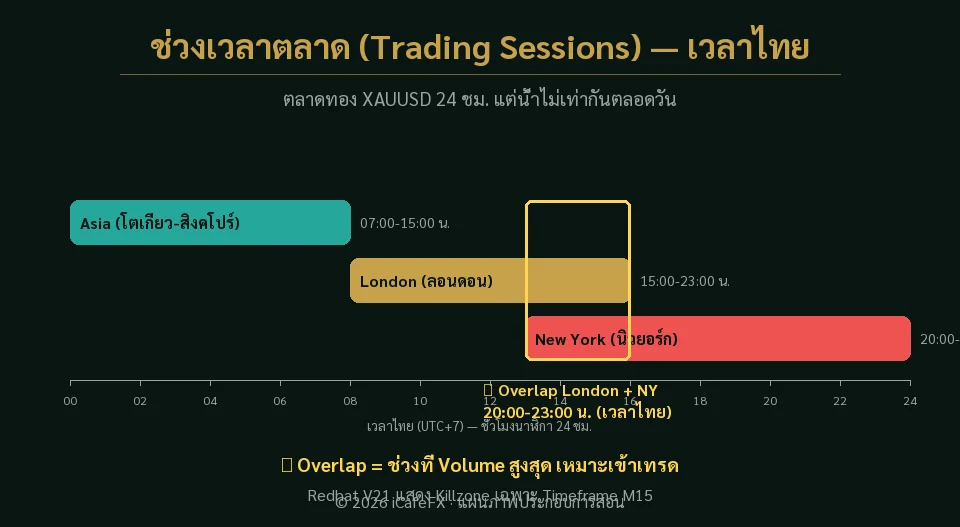
Killzone is the window when the market is bustling — the hours when London and New York are open: liquidity is high, price really moves, and Redhat highlights this window on the chart (M15 only)
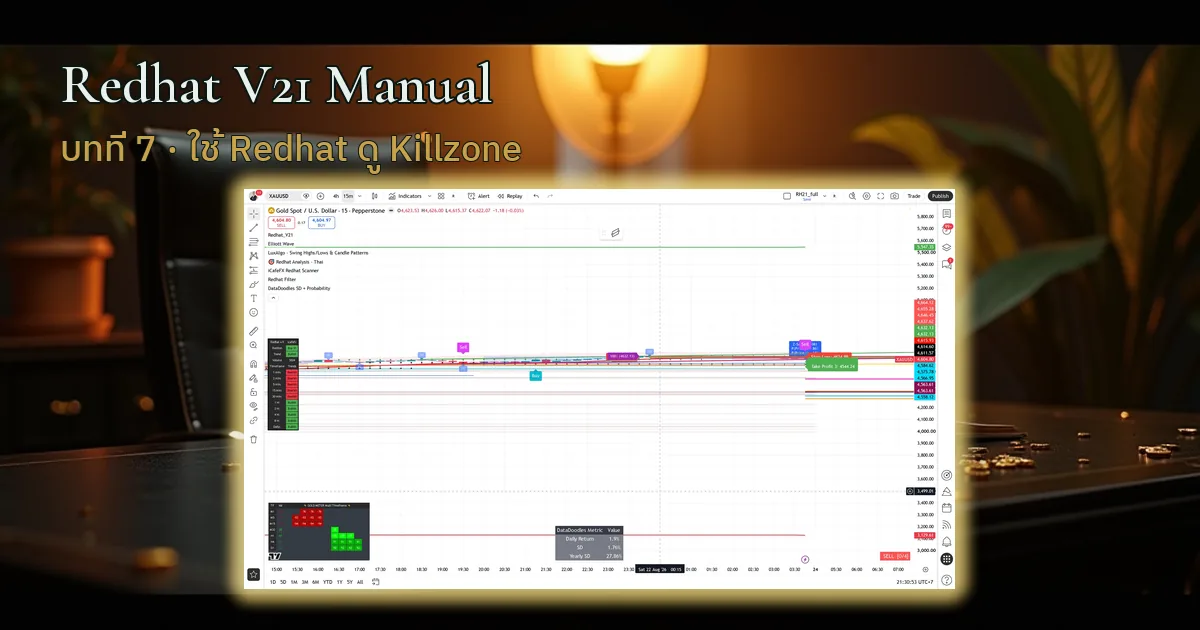
Chapter summary video
Real chart screen recording · not investment advice
Listen to the TL;DR summary of this chapter
TL;DR
Killzone is the window when the market is bustling — London and New York are open, liquidity is high and price really moves; Redhat highlights this window on the chart, signals inside it are more trustworthy, and you must use M15
1 · What the Killzone is
Killzone is the window when the market is bustling — the hours when London and New York are open for business, liquidity is high and price moves in a genuine trend
Picture a fresh market: in the morning it is crowded and goods move fast — the Killzone is the market's crowded hour, when signals actually mean something
Killzone = the London/New York window, bustling market, more trustworthy signals
2 · How Redhat shows it on screen
Redhat highlights the Killzone as a colored block on the chart background — you clearly see the window when the market is bustling
Important: the M15 frame only — the system scopes this to a fixed timeframe, so any larger frame will not display the Killzone
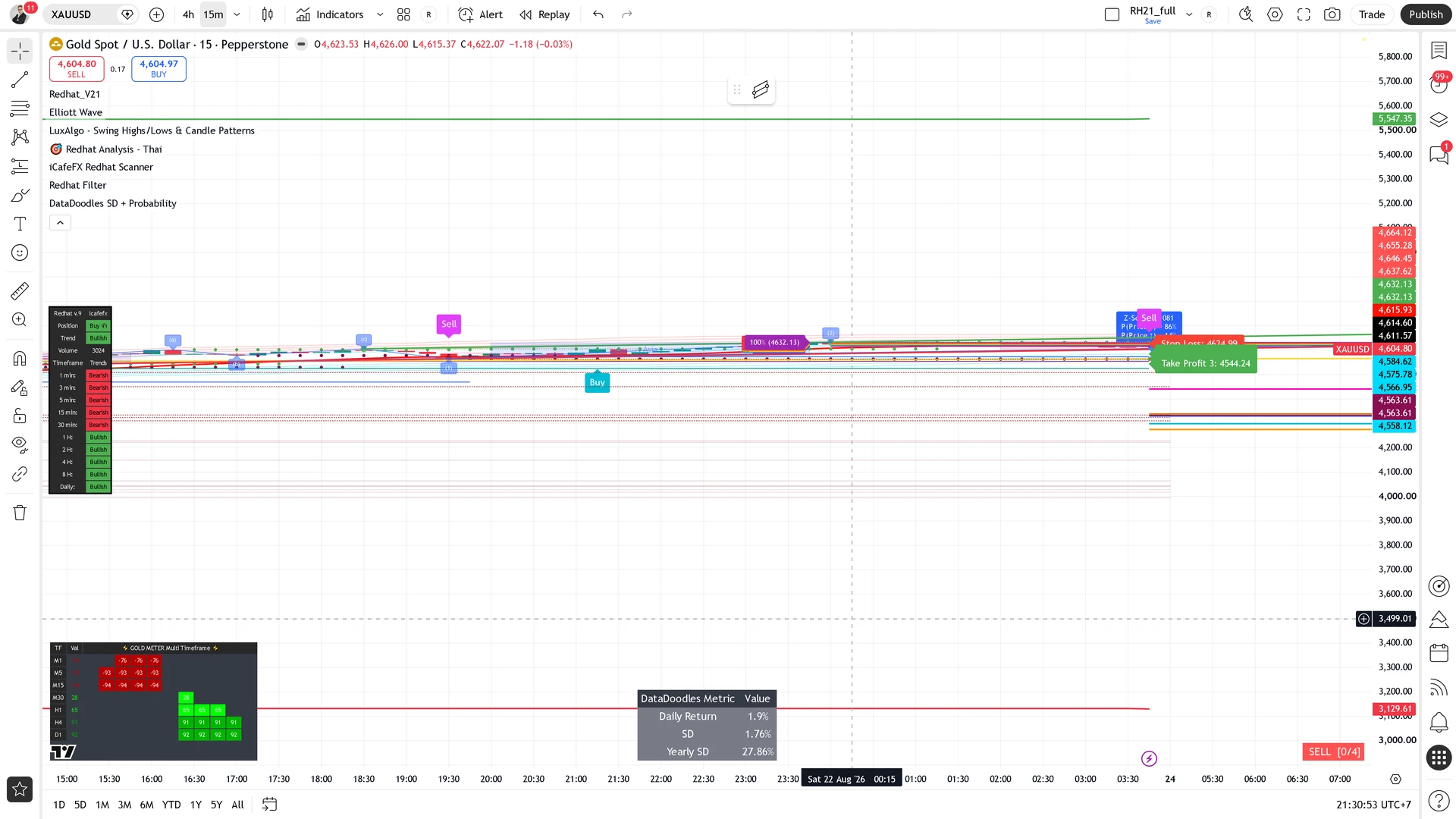
Use M15 only — larger frames will not show the Killzone (some illustrations use a larger frame so the structure is clear — real use happens on M15)
3 · How to use the Killzone
How to use it: signals that fire inside the Killzone are more trustworthy; outside the Killzone the market is quiet and signals are more often false
- Look — are we inside the Killzone right now (can you see the highlighted block)
- Check — did the signal fire inside the Killzone or in a quiet stretch
- Weigh it — signals inside the Killzone deserve more trust
"A bustling market = signals that mean something; a quiet market = signals that often deceive"
This chapter in one line
Killzone = the London/New York window when the market bustles; Redhat highlights it, signals inside it are more trustworthy, and it requires M15