The case studies in this chapter are examples where the conditions happened to align — they do not include statistics on cases that failed the conditions; read them as worked examples of how to look, not as a success rate
PART 4 · Putting it together
Case studies
2 real case studies Example 1: full confluence, entered and it paid off / Example 2: incomplete confluence, so no entry
Chapter summary video
Real chart screen recording · not investment advice
Listen to the TL;DR summary of this chapter
TL;DR
2 real case studies — Example 1: full confluence, entered and it paid off / Example 2: incomplete confluence, so no entry (a lesson in holding back)
1 · Case 1: full confluence
This example shows a system entry point — the Buy signal (the final confirmation) appeared at the start of an up-wave, and several tools agreed (full confluence):
- Direction — the trend was up
- Elliott — an up-wave
- Fib — support at the starting point
Result: price surged to 4575 = full confluence, entered, and it paid off
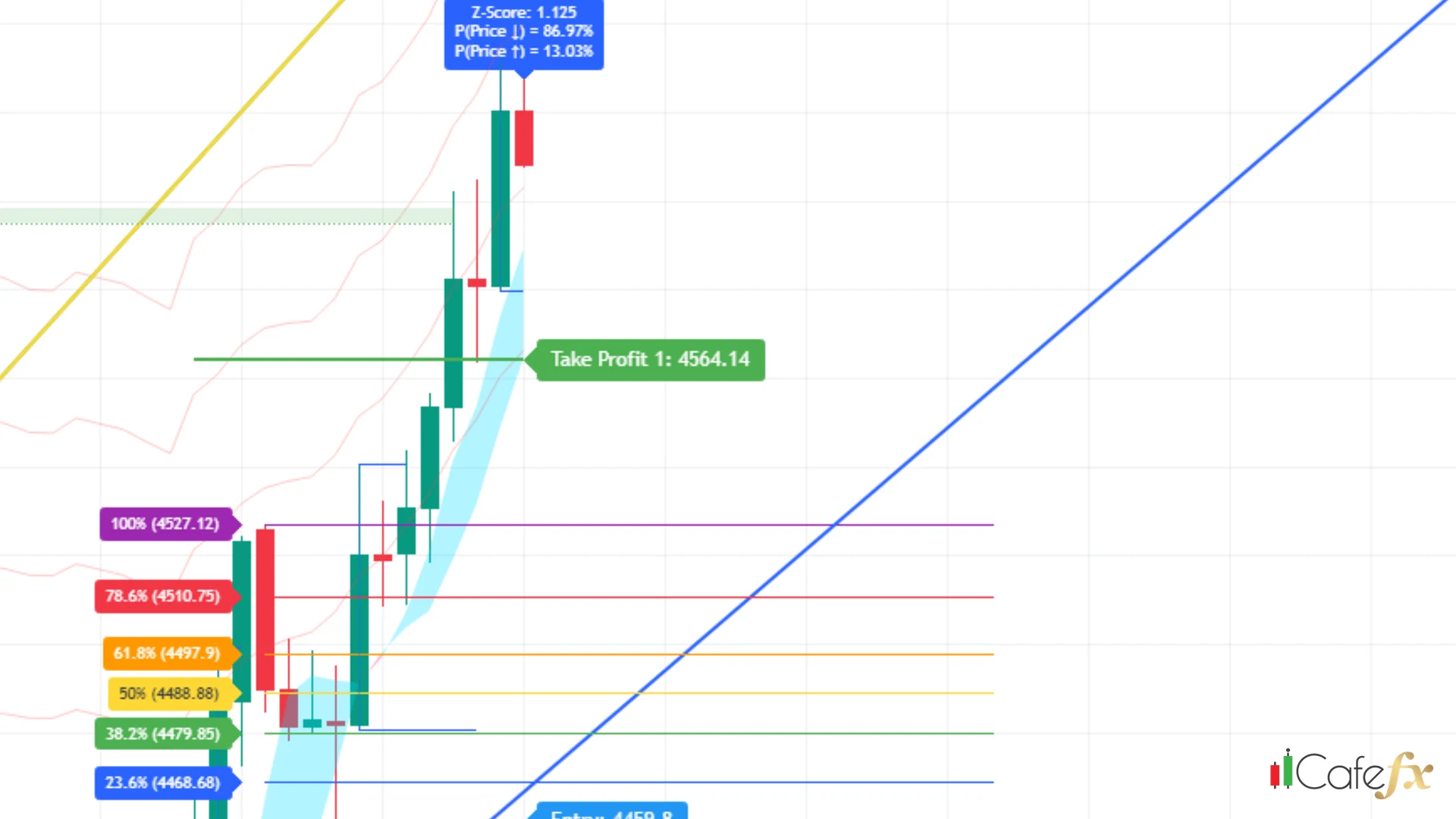
Standard mode — hold the long trade to the 4575 target (the target marked on the image), then take profit at the 1R/2R/3R targets measured from the SL distance
Short-term mode — do not hold to 4575; take profit when price pulls back down to touch the red AMA line (in the image the AMA line sits around 4550.87; price spiked to 4575 then pulled back near the AMA line, making that the short-term exit)
Comparison: short-term mode exits sooner + earns less · standard mode earns more + holds longer / carries more reversal risk — pick according to market rhythm (strong trend → standard, choppy market → short-term)
2 · Case 2: incomplete confluence
This example shows a Sell signal (the final confirmation) appearing at a top — at a glance it looks enterable, but check the confluence:
- Dashboard — the timeframes disagree (some up, some down)
- Gold Meter — it disagrees too
Result: incomplete confluence = no entry; wait for the next setup (a lesson in holding back)
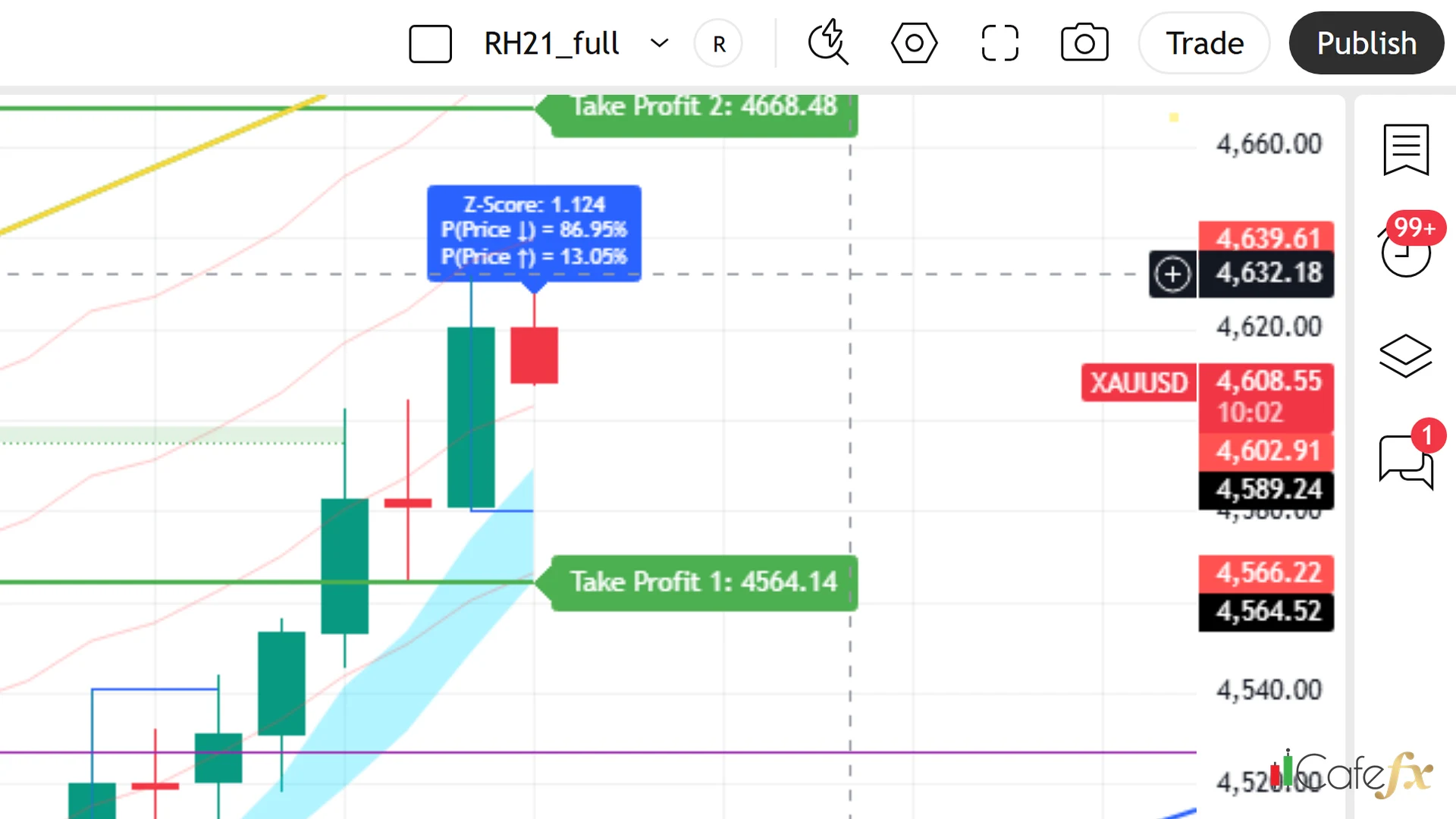
It looks enterable at a glance, but check the confluence first — incomplete means no entry
3 · Lessons from the 2 cases
Both cases in summary:
- Case 1 won — because Trend + Elliott + Fib agreed = full confluence
- Case 2 was skipped — because Dashboard + Gold Meter disagreed = incomplete confluence
The lesson: enter only on full confluence; incomplete = no entry — one rule that works in every situation
Sometimes not entering beats entering — knowing when to hold back is a core skill, not cowardice
"Sometimes not entering beats entering — knowing when to hold back is a core skill"
This chapter in one line
Case 1: full confluence (Trend + Elliott + Fib), entered and it paid off; Case 2: incomplete confluence (Dashboard + Gold Meter disagreed), so no entry — wait for the next one